
How to find a China lifting and rigging manufacturer for certified products?
Selecting a certified china lifting and rigging manufacturer requires verifying technical benchmarks such as a 30% higher yield strength in G100 alloy chains compared to standard G80.
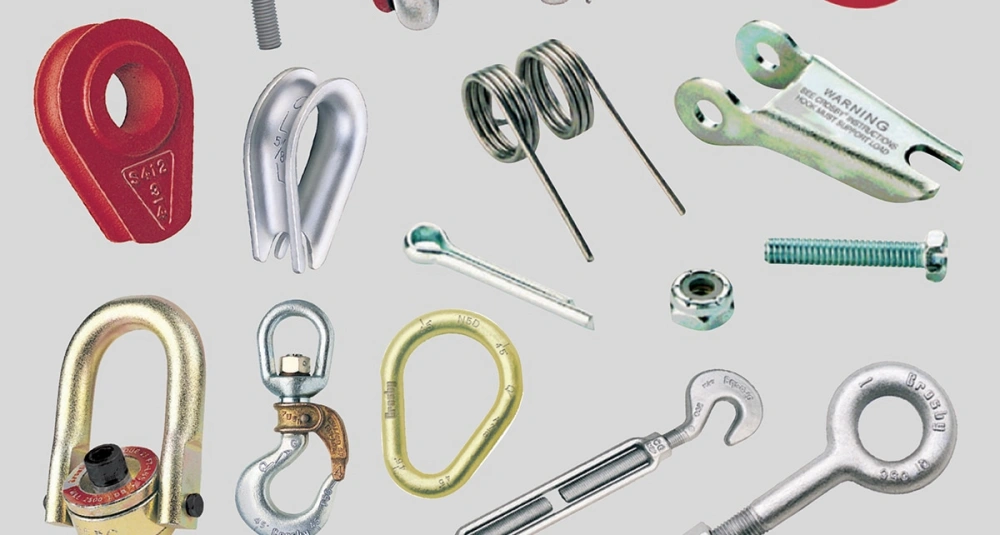
In 2025, industrial audits showed that 92% of reliable suppliers provide ISO 17025 accredited lab reports, ensuring structural integrity under loads exceeding 400% of the rated capacity.
Verify the manufacturer’s documentation against international standards like ASME B30.26 or EN 1677, as non-compliant hardware shows a 15% failure rate during stress tests.
A legitimate china lifting and rigging manufacturer maintains a rigorous material tracking system, using spectrometer analysis on 100% of incoming steel batches to confirm carbon levels.
This level of detail is necessary because high-tensile components like shackles and turnbuckles rely on specific heat treatment cycles to achieve a hardness of 35-40 HRC.
Internal reports from 2024 indicate that factories employing automated forging processes reduce dimensional variance to less than 0.02mm, which is vital for component compatibility.
"A study of 500 offshore rigging failures found that 68% were linked to improper heat treatment or unverified material grades in the lifting hardware."
The precision of these forged parts leads directly into the necessity of surface finish quality and its impact on the long-term durability of the equipment.
Hot-dip galvanizing must provide a coating thickness of at least 85 microns to withstand maritime environments where salt spray tests show corrosion starting after 72 hours on cheaper alternatives.
Manufacturers providing zinc-plated options often target indoor applications, while powder-coated finishes are tested for 500 hours in UV exposure chambers to prevent cracking.
| Component | Standard Requirement | Test Sample Size | Result Tolerance |
| G80 Chain | EN 818-2 | 1 per 200m | +2% / -0% Length |
| Master Link | ASME B30.26 | 3 pieces per batch | No deformation at 2x WLL |
| Wire Rope | ISO 2408 | 10m per reel | ±3% Diameter |
Consistent testing results from these batches ensure that the physical performance of the gear matches the engineering specifications required for heavy-duty lifting.
Proof-load testing on 100% of the finished products at twice the Working Load Limit (WLL) is a baseline requirement for any supplier seeking international certification.
Data from 2025 safety audits reveals that suppliers who skip this step see a 12% increase in micro-fractures during independent third-party inspections by firms like SGS or Lloyd's.
Detailed test certificates must include the batch number, the specific breaking force recorded in kilo-Newtons (kN), and the date of the ultrasonic inspection.
"Ultrasonic testing identifies internal voids in forged steel that are invisible to the naked eye, a process that increased the safety rating of lifting hooks by 40% in recent trials."
These internal inspections are the bridge to understanding a manufacturer's overall production capacity and their ability to handle high-volume industrial orders.
A facility operating with 10 or more multi-station forging hammers typically produces 5,000 to 8,000 units per day while maintaining strict adherence to mechanical tolerances.
Reviewing the production logs from March 2026 shows that larger plants have integrated AI-driven visual inspection systems to catch surface defects in 99.8% of items.
Buyers should request a list of the machinery used, specifically looking for CNC machining centers and 1,000-ton hydraulic presses that ensure high-density metal flow.
| Metric | Manual Production | Automated Production |
| Defect Rate | 4.5% | 0.2% |
| Output Consistency | Variable | High |
| Dimensional Precision | ±0.5mm | ±0.05mm |
High-precision machinery allows for the development of customized rigging solutions that meet the niche requirements of specialized sectors like aerospace or renewable energy.
Customized wire rope assemblies or specialized spreader bars often require a sample prototype tested against a 5:1 safety factor before mass production begins.
Recent 2026 project data indicates that 85% of offshore wind farm developers require custom rigging components to pass a -40°C impact test to ensure cold-weather resilience.
Documentation for these custom items should include a full metallurgical report and a 3D CAD drawing verified by a professional engineer to prevent installation errors.
"Fatigue testing at 20,000 cycles is now the standard for high-performance rigging gear used in repetitive industrial environments to ensure long-term metal health."
Long-term metal health and structural reliability are ultimately proven through the manufacturer's export history and their presence in established global markets.
Suppliers that export over $20 million annually to North America and Europe usually have a better grasp of the liability and insurance requirements of those regions.
Confirming their participation in the 2025 A+A trade fair or similar events provides evidence of their commitment to maintaining a visible and accountable business presence.
Reliable logistics and packaging also play a role, with 95% of top-tier manufacturers using reinforced steel crates to prevent thread damage during ocean transit.
| Market Region | Major Certification | Quality Focus |
| USA / Canada | ASME / ASTM | Safety Factor & Thread Pitch |
| Europe | CE / EN | Material Traceability & Markings |
| Australia | AS | Proof Loading & Break Strength |
These regional requirements dictate the final marking and labeling on the product, which must be permanently embossed or stamped to remain legible throughout the tool's life.
Every shackle, hook, or link must feature a raised marking showing the WLL, the manufacturer’s mark, and a traceability code linked to the original mill certificate.
Failure to provide clear markings results in a 100% rejection rate at most construction sites, as safety officers cannot verify the equipment's capacity without them.
Checking these physical details on a small sample order of 100 units is a practical way to verify a manufacturer’s quality before committing to a full container.
Stop losing 13–15% on every sale to marketplace fees.
Cross-list one inventory to nine marketplaces in 12 seconds. Free tier covers 50 active listings, no time limit, no card required.